
Chickenpox in Adults and Children
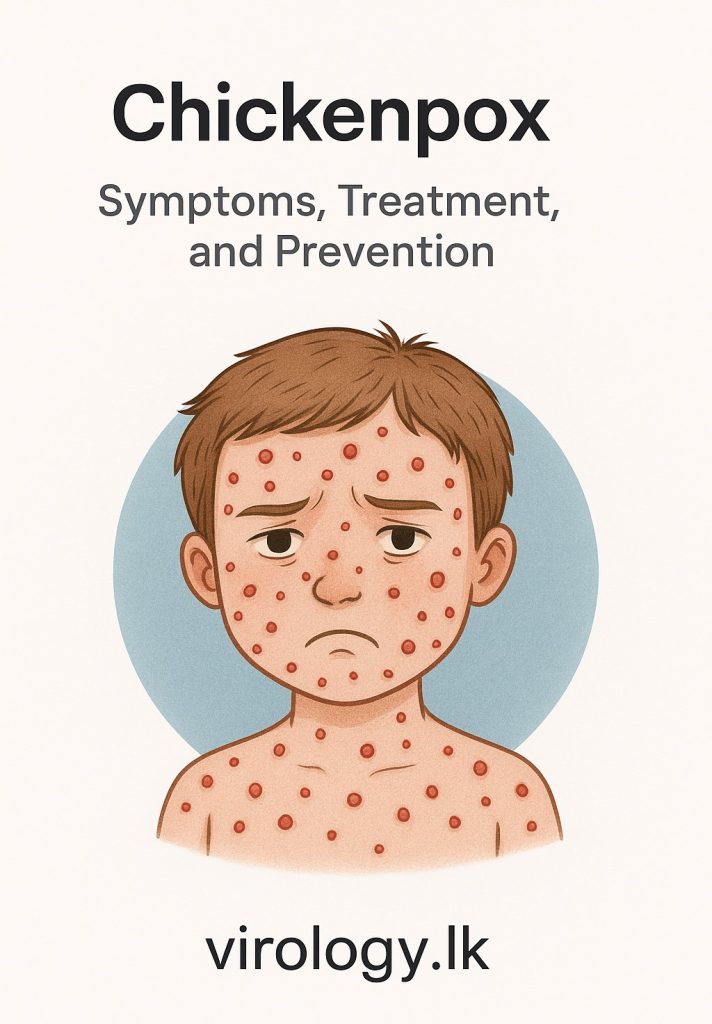
Chickenpox, also known as varicella, is a highly contagious viral infection caused by the varicella-zoster virus (VZV). While common in children, chickenpox can affect people of all ages and may be more severe in adults. Here’s what you need to know about chickenpox in adults and children, especially in the Sri Lankan setting.
How Does Chickenpox Spread?
Chickenpox spreads through:
- Direct contact with fluid from blisters
- Coughs and sneezes (airborne droplets)
- Touching contaminated objects or surfaces
A person is contagious from 1–2 days before the rash appears until all blisters have scabbed over (about 5–7 days).
Symptoms of Chickenpox in Children and Adults
Symptoms typically appear 10–21 days after exposure.
In children, symptoms include:
- Low-grade fever
- Fatigue and loss of appetite
- Red, itchy rash that turns into fluid-filled blisters
- Rash starts on face, chest, and back, spreading to rest of body
In adults, symptoms are often more severe:
- Higher fever and more fatigue
- More widespread rash
- Greater risk of complications like pneumonia, hepatitis, or encephalitis
Complications of Chickenpox
Complications are rare in healthy children but more likely in:
- Adults
- Pregnant women
- Newborns
- People with weakened immune systems
Possible complications include:
- Skin infections
- Pneumonia
- Brain inflammation (encephalitis)
- Reye’s syndrome (linked to aspirin use in children)
Diagnosis and When to See a Doctor
Chickenpox is usually diagnosed clinically by examining the rash.
Seek medical care if:
- The rash is severe or painful
- Fever persists beyond 4 days
- There is shortness of breath, drowsiness, or vomiting
- You’re pregnant or immunocompromised and have been exposed
A blood test or PCR can confirm varicella-zoster virus if needed.
Treatment of Chickenpox
Most cases can be managed at home:
- Paracetamol for fever and pain
- Calamine lotion or oatmeal baths for itching
- Antihistamines (for older children or adults)
- Plenty of fluids and rest
Avoid aspirin in children due to risk of Reye’s syndrome.
For adults and high-risk groups, doctors may prescribe antiviral medication (e.g., acyclovir), especially if started early.
Chickenpox Vaccine in Sri Lanka
The varicella vaccine is available in Sri Lanka at private hospitals and some clinics.
- Given as 2 doses, starting from 12 months of age
- Can prevent 90% of infections and nearly all severe cases
- Also recommended for adults who never had chickenpox or were not vaccinated
Vaccination is especially important for teachers, healthcare workers, and women planning pregnancy.
Care at Home: Tips for Parents and Patients
- Keep fingernails short to prevent scratching and infection
- Isolate the patient from others (especially babies and pregnant women)
- Use loose, soft clothing to avoid irritating the rash
- Disinfect toys, bedding, and commonly touched surfaces
Children can usually return to school after all blisters have crusted (5–7 days).
Conclusion
Chickenpox in adults and children is usually mild in healthy kids but can lead to serious complications in adults and vulnerable groups. Early diagnosis, supportive care, and vaccination are key to managing and preventing the disease. For trusted local guidance, visit virology.lk or consult a Virologist